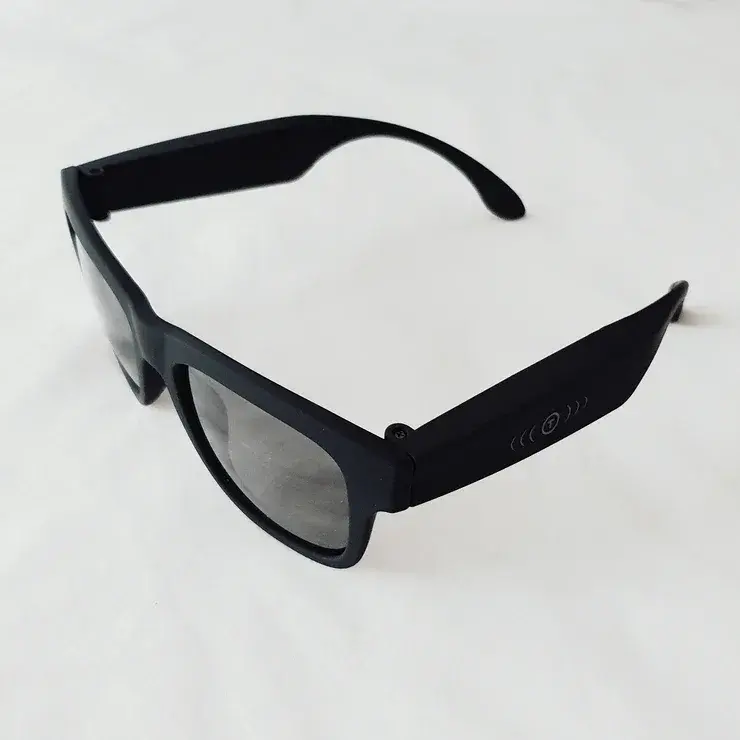
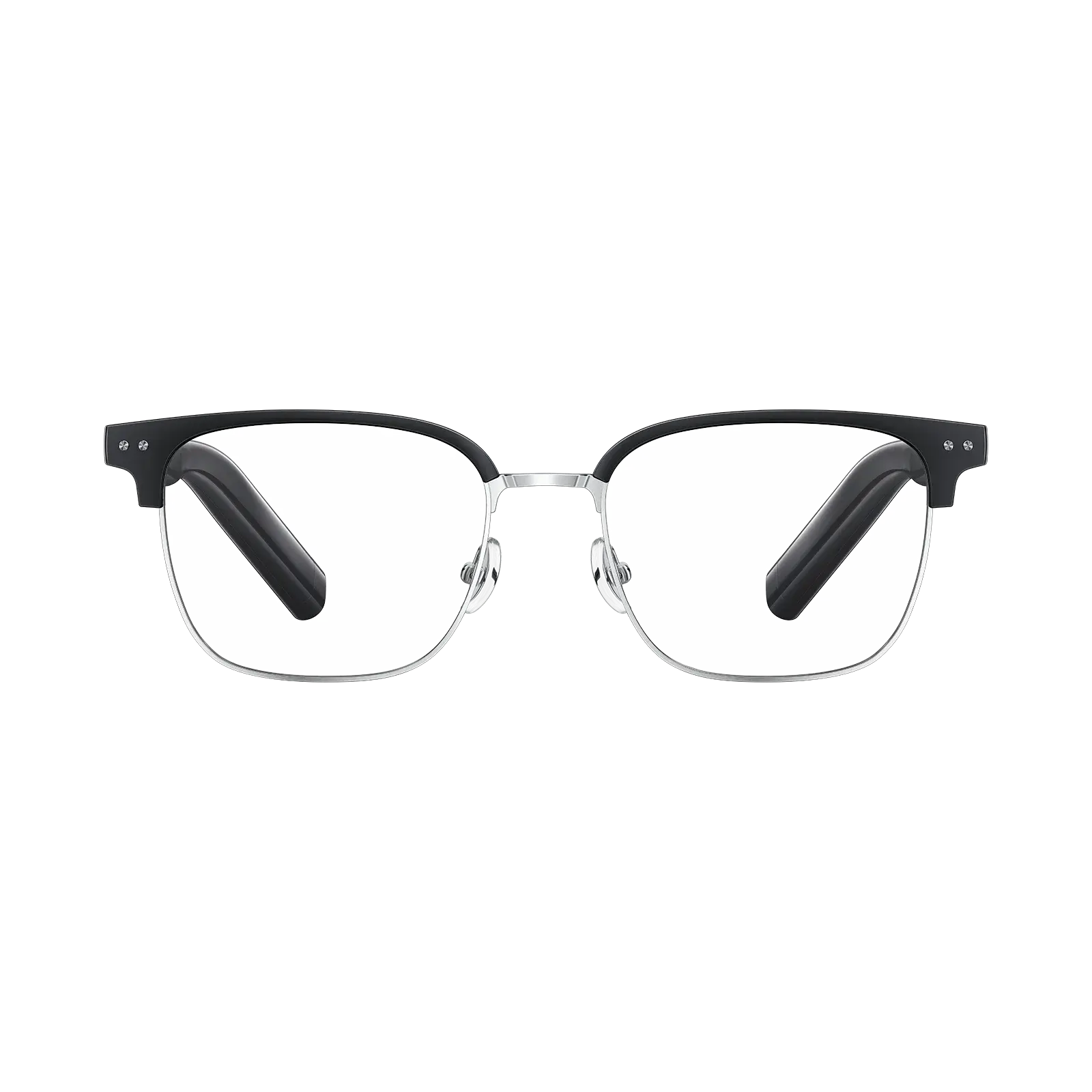
Imagine listening to your favorite podcast or taking a phone call, but your ears are completely unplugged and open to the world around you. You aren't using earbuds, and you aren't using traditional speakers. Instead, the sound is vibrating directly through the bones in your head.
Welcome to bone conduction — a very real technology increasingly integrated into modern smart glasses. Here's a simple breakdown of how this fascinating acoustic technology works, where it came from, and where it fits in the future of wearables.
To understand bone conduction, you first need to understand how we normally hear. Usually, sound waves travel through the air, enter the outer ear canal, and vibrate the eardrum, which sends signals to the cochlea (the inner ear).
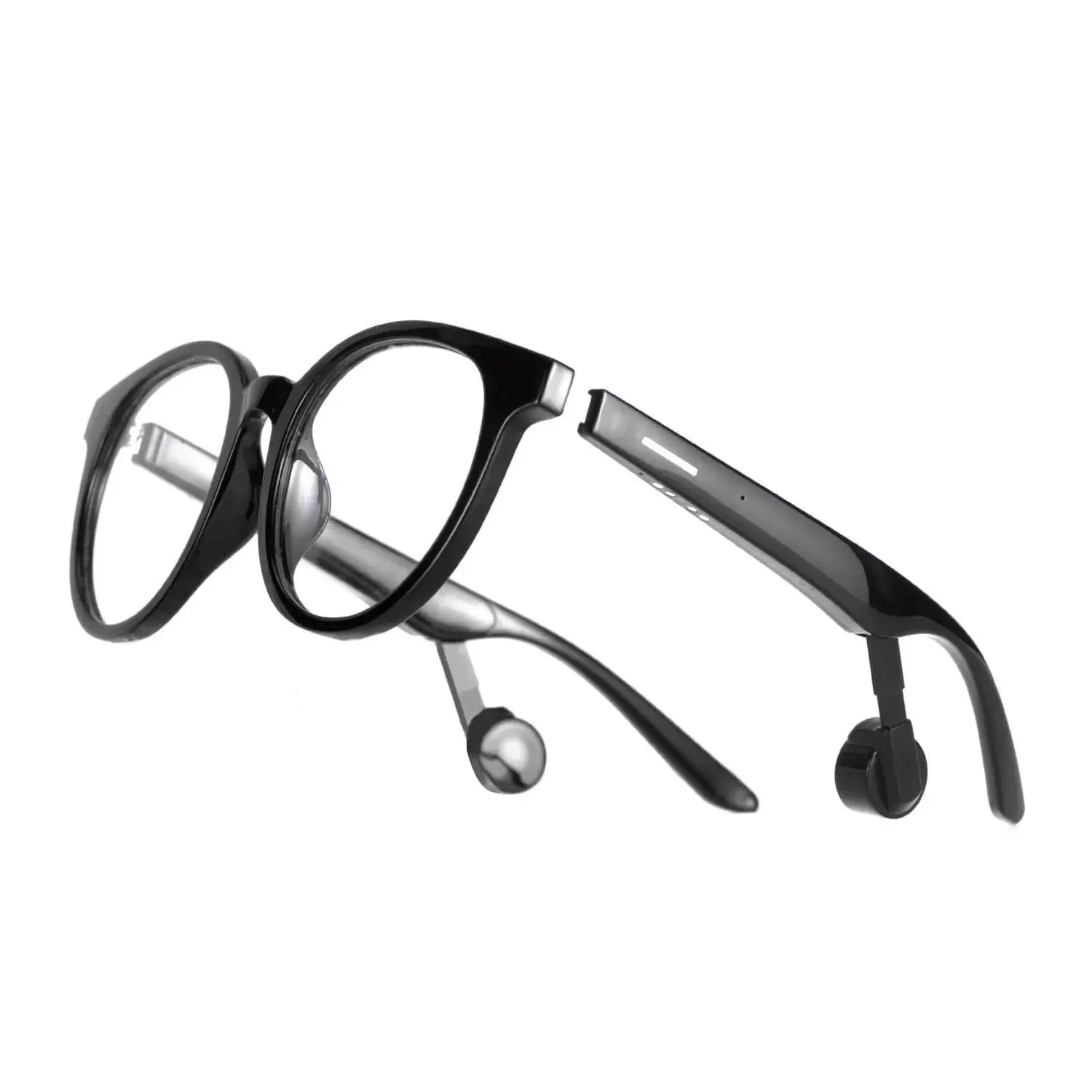
Bone conduction completely bypasses this traditional acoustic highway. In bone-conduction smart glasses, the frame itself acts as the vibration conductor. Small vibration transducers are integrated into the temple tips and press against the mastoid bone — the bony prominence just behind your ear. When audio plays, these transducers vibrate, sending sound waves through your bone tissue directly to the cochlea. You "hear" the sound inside your head, bypassing the outer and middle ear entirely.
This placement is critical — the mastoid bone provides one of the shortest, most efficient paths to the cochlea, which is why it has been the preferred contact point in clinical bone conduction devices for decades.
Because the wearable market is flooded with new terms, bone conduction is often confused with "open-ear" directional speakers. While both technologies keep your ear canal open, they work via completely different mechanisms.
Smart glasses with open-ear directional speakers (like the Amazon Echo Frames or Solos AirGo) feature tiny, traditional speakers built into the arms of the frames. They play sound through the air and use acoustic beamforming to direct the audio into your ear while attempting to minimize how much sound leaks out to others.
Bone conduction, on the other hand, relies on direct physical contact and bone vibration rather than airborne sound waves. The transducers must press against your skull to work — no air gap, no Beamforming. This fundamental difference affects everything from audio quality to who can benefit from the technology.
Explore smart glasses that use bone conduction transducers to deliver sound through your skull — no earbuds needed.
Bone conduction isn't a new experimental technology — it has a long, proven history in the medical field. Bone-Anchored Hearing Aids (BAHA) have been FDA-approved since 1977, specifically to treat patients with conductive hearing loss where the outer or middle ear is damaged but the inner ear (cochlea) still functions.
For decades, this technology remained primarily clinical. The paradigm shifted when consumer brands like AfterShokz (now Shokz) introduced bone-conduction sports headphones starting around 2011. They successfully proved that bone conduction could be highly effective outside the clinic for everyday recreational use, paving the way for the technology to be miniaturized and integrated into smart eyewear.
Today, products like the Voxos Bone Conduction Smartglasses and the Divinus Apollo bring this proven medical technology into a fashionable glasses form factor.
Because bone conduction leaves your ears entirely unobstructed, it unlocks several distinct and highly valuable use cases:
Sports and Cycling: Athletes need to hear traffic, nature, and other people to stay safe. Bone conduction preserves full Situational Awareness while simultaneously delivering music, navigation cues, or coaching feedback. This is why bone conduction dominates the athletic audio wearable market.
Hearing Enhancement: For individuals with specific types of outer or middle ear conditions, bone conduction can act as an assistive hearing device, channeling amplified sound directly to the healthy inner ear. The 2022 OTC Hearing Aid Act opened the door for consumer bone conduction devices to serve this market without a prescription — though most bone conduction glasses are currently classified as PSAPs (Personal Sound Amplification Products), not regulated hearing aids.
Professional Monitoring: In industrial or Enterprise settings, workers can receive discrete audio instructions or alerts without wearing earplugs that might block out important environmental hazard warnings.
While bone conduction is innovative, it is not flawless. If you're an audiophile looking for pristine musical fidelity, bone conduction may not be your first choice.
Weaker Bass Response: The physical limitations of transmitting sound through bone result in a noticeably weaker bass response compared to traditional air-conduction speakers. You'll hear vocals and mid-range frequencies clearly, but deep bass is significantly reduced.
Skin Fatigue: Because the technology relies on physical vibration against your skull, playing audio at high volumes can cause a tickling sensation or discomfort where the transducers press against your head — especially during extended listening sessions.
Sound Leakage: Despite vibrating the skull rather than pushing air, the transducers still generate some airborne sound. At maximum volume, people nearby can hear what you're listening to, reducing the privacy advantage.
In the broader smart glasses ecosystem, bone conduction primarily serves two roles:
Screen-Free AI Assistants (Class 1): These are smart glasses that look like traditional fashion eyewear but house digital assistants, microphones, and audio capabilities without distracting screens. Bone conduction is an ideal audio delivery mechanism for these AI-driven glasses because it allows users to receive information hands-free and ears-free.
Hearing Enhancement: Bone conduction is a major pillar in the Hearing Enhancement category — glasses designed specifically for accessibility and health. As traditional hearing aid stigma drives consumers toward discreet alternatives, smart glasses with bone conduction offer a socially normalized form factor. You're wearing glasses, not "hearing aids."
Whether you're a cyclist who needs to stay alert on the road, someone exploring options for mild hearing challenges, or simply curious about the next evolution of audio wearables — bone conduction smart glasses represent one of the most practical and proven technologies in the space.
An honest look at why all open-ear smart glasses leak some sound, how much leakage to expect, and practical tips for managing audio privacy in different environments.
Understand the critical regulatory and functional difference between Personal Sound Amplification Products (PSAPs) and FDA-regulated Over-the-Counter Hearing Aids in the smart glasses market.
A consumer-friendly comparison of the two fundamentally different ways smart glasses deliver audio — through the air (traditional) or through your skull (bone conduction).